Home » Mobile Home Leveling

When Your Floor Slopes, Something Under the Home Has Shifted

Walk across your living room. Does it feel like the floor tilts toward one wall? Pull your front door open. Does it drag across the frame? These are not small problems. They are warning signs that the frame holding your home up has moved. And the longer you wait, the worse it gets.
Mobile home frames sit on a set of steel piers and concrete blocks. When those supports shift, the whole frame shifts with them. Walls crack. Cabinets pull away from the ceiling. Windows jam in their tracks. Next, plumbing lines stretch out of position. In bad cases, the roof itself can start to gap at the seams.
We fix this. We level manufactured and mobile homes in Prescott Valley, AZ. We measure, we lift, and we lock the frame back into place. Every job follows Arizona state standards and HUD federal rules.

Our Leveling and Foundation Repair Services
We handle the full range of under-home structural work. Here is what each service involves and how we do it right.

Under-Home Foundation Inspection

Before we touch anything, we check the entire foundation. This inspection is the starting point for every job we take.
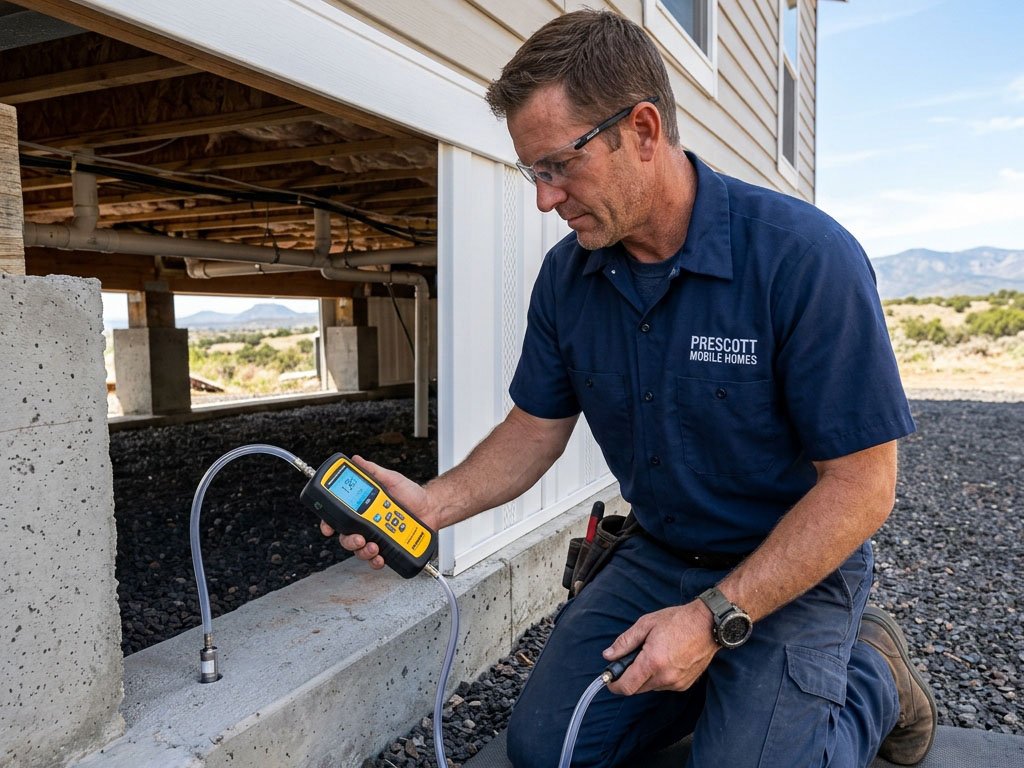
We crawl into the crawl space with our measuring equipment. Next, we run a flexible vinyl water-level tubing system across the floor of the space. This shows us the elevation at every support point. Then we look through a heavy-duty optical surveyor transit level to confirm the steel frame is straight from end to end. This transit level gives us a fixed line of sight so we can see exactly how much each pier has shifted. Finally, we check that the crawl space meets ADOH Rule A.A.C. R4-34-602 inspection access and clearance requirements. This means we verify the crawl space is safe to work in before we do anything else. We then share the results with you before we start any repairs.

Hydraulic Frame Lifting and Re-Leveling
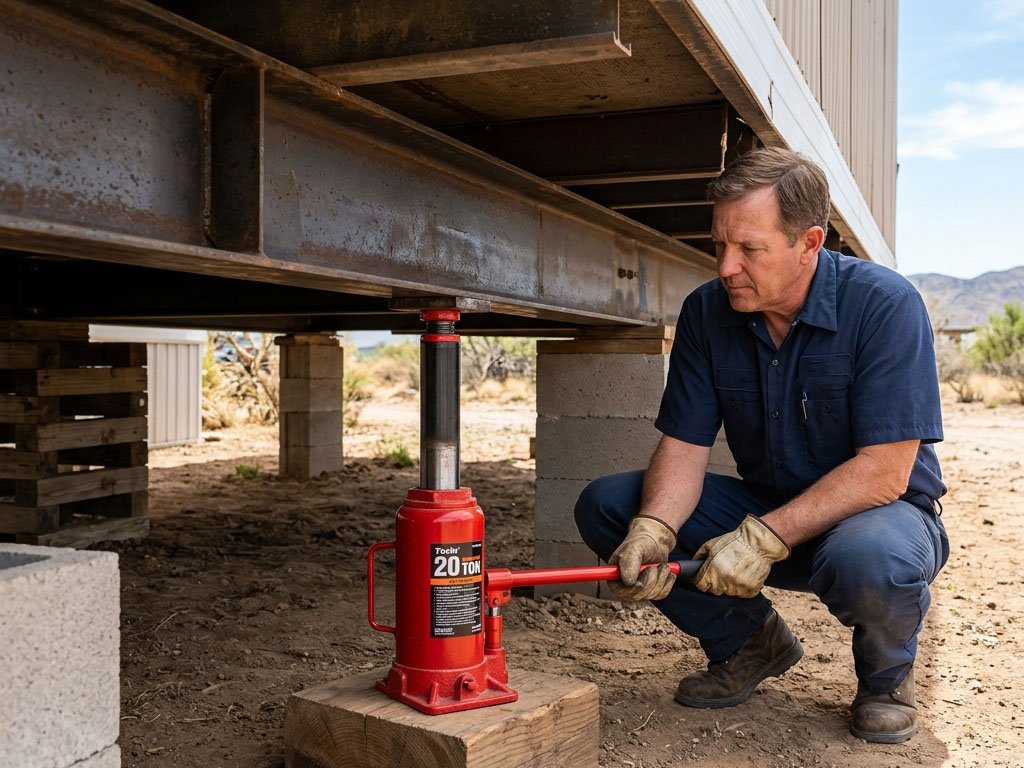
When the inspection shows the frame has dropped, we lift it back to the correct position. This step takes patience and the right equipment.
First, we position a solid carbon-steel frame helper plate under the steel I-beam at the lift point. This plate spreads the lifting force over a wide area so the beam does not bend. Next, we slide a pneumatic-over-hydraulic toe jack into place under the helper plate. This jack uses compressed air to generate a slow, steady upward push. Air-assisted jacks are gentler than pure hydraulic jacks. This means we can raise the frame an inch per hour without cracking the drywall inside. After we reach the target height, we verify the chassis position against ADOH Rule A.A.C. R4-34-607 installation re-leveling tolerances. This means the frame must sit within the official Arizona deviation limits before we lock anything in place.

Concrete Block, Pier, and Shim Repairs
Lifting the frame is only half the job. The real work is making sure the piers underneath hold that frame up permanently.
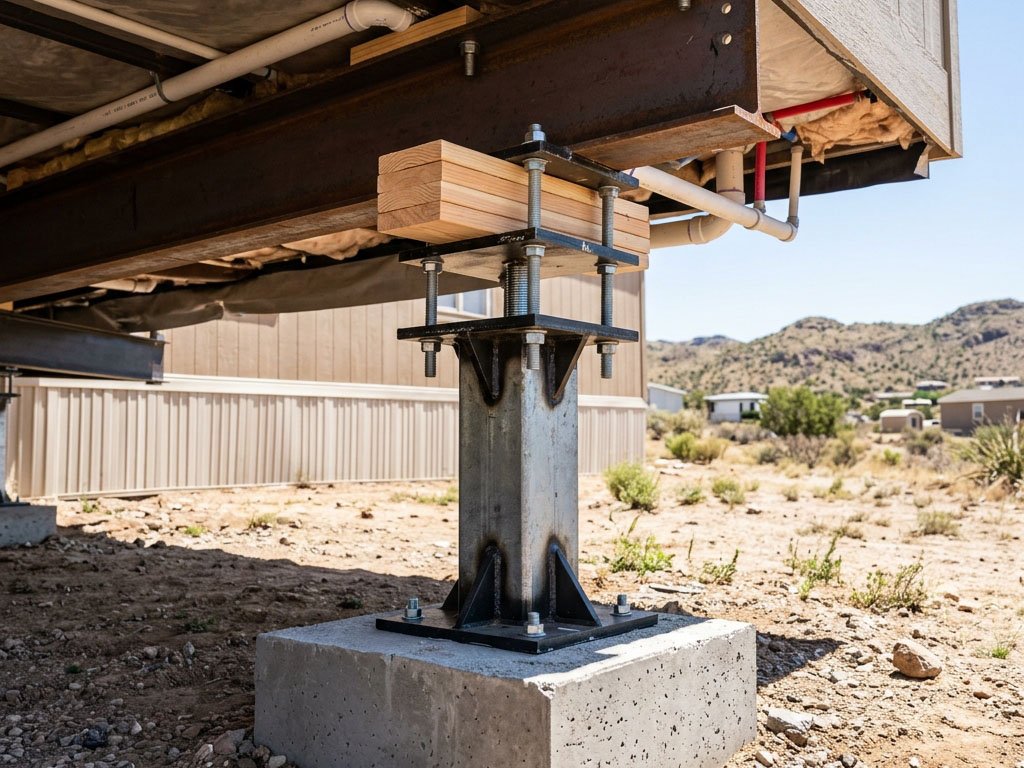
We start by pulling out any cracked or tilted concrete blocks. Next, we set new blocks on compact, flat soil. Then we fit pressure-treated split hardwood wedge shims between the top of the block and the steel frame. These shims fill the small gap and remove any remaining wobble. To drive them in, we use a non-sparking copper-alloy shimming mallet. This type of mallet is safe near gas lines and does not damage the shim material. After the shims are set, we verify pier spacing against HUD Manufactured Home Construction and Safety Standards 24 CFR Section 3280.306 pier support spacing requirements. This means every pier is placed at the correct distance from the next one so the load is shared equally across the frame.

Foundation Certification for FHA and VA Loans
Buying or selling a manufactured home often requires a foundation certificate. Many lenders will not approve a loan without one. We prepare your home for this certification.
First, we inspect the crawl space structure in detail. Next, we test the load-bearing strength of the soil under your footers. We press a handheld pocket penetrometer soil tester directly into the soil at each pier location. This small tool measures how much force the soil resists. It tells us whether the dirt can carry the weight of the concrete block long-term. Also, we inspect the corrugated galvanized steel skirting panels around the perimeter of the home. Lenders check that skirting is properly installed and vented. Finally, we verify the entire foundation setup against the FHA Single Family Housing Policy Handbook 4000.1 permanent foundation guidelines. This means your home’s foundation meets federal lending standards so your loan can move forward.

Wind Tie-Down Strap Inspection and Tensioning

Yavapai County gets strong winds. A manufactured home that is not properly anchored can shift off its piers during a bad storm. Proper tie-downs prevent this.
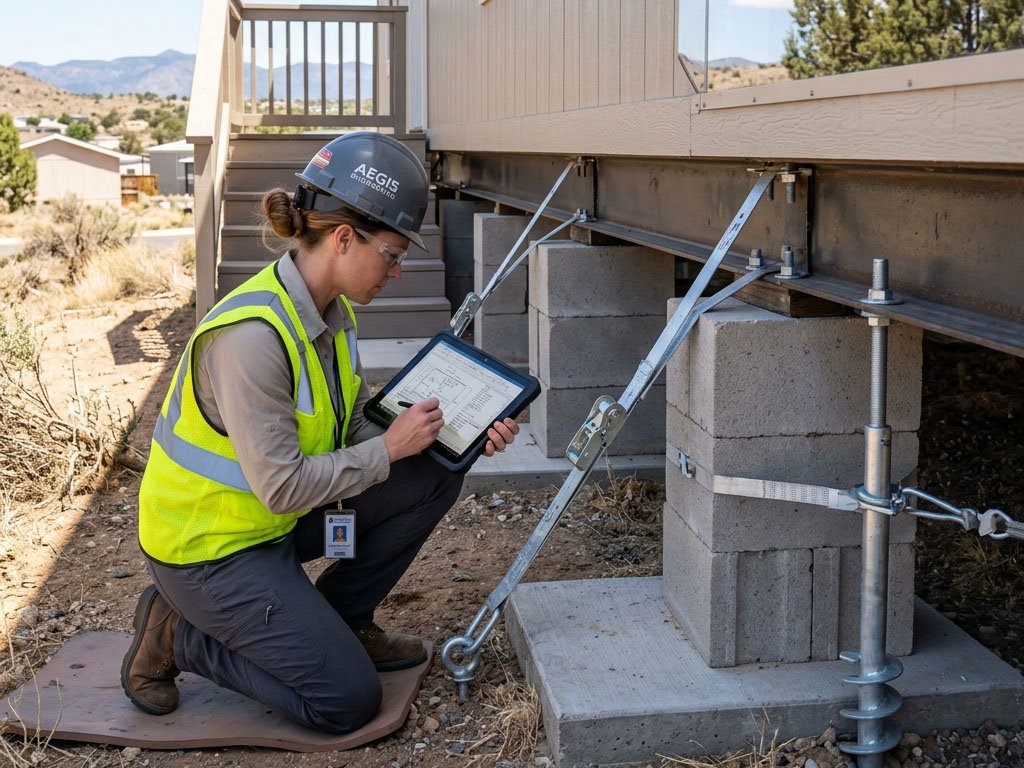
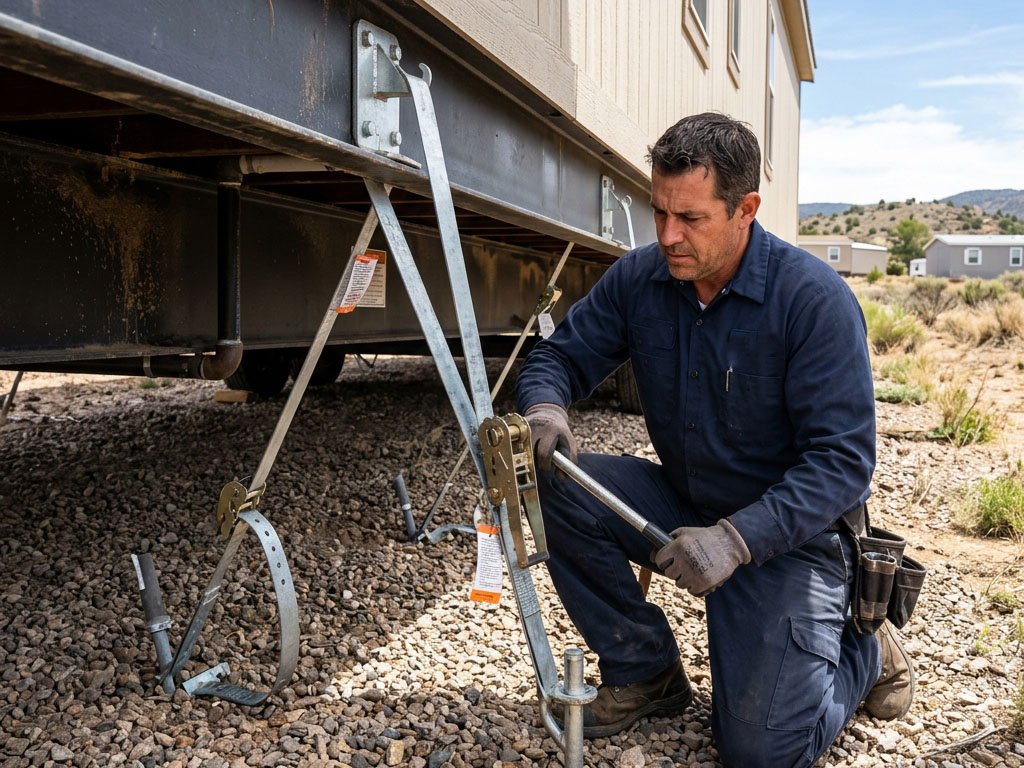
We start by walking the perimeter and checking every strap and anchor. Next, we look for rust, fraying, or slack in the strap material. If straps are loose or corroded, we replace them. We thread new double-looped galvanized steel tie-down straps through the anchor points and over the steel frame. Then we attach a heavy-duty strap-tensioning windlass tool to each strap and crank it to the correct tension. This windlass tool locks the strap so it cannot loosen over time. Also, we verify that the ground anchors are set at the right depth and angle. Finally, we confirm the entire tie-down setup meets ADOH Rule A.A.C. R4-34-608 tie-down anchor spacing and tension rules. This means your home is secured to state code and is ready for wind season.

The Contractor Your Neighbors in Prescott Valley Already Trust

Leveling a manufactured home is not the same as leveling a house. A site-built home rests on a concrete slab or wood foundation. A manufactured home rests on a row of steel piers, concrete blocks, and wood shims. Lift the frame from the wrong spot and you can warp a steel I-beam that costs far more to fix than the original leveling job.
That is why it matters who you call. Here is what sets us apart from a general handyman or a non-specialized contractor:

We work on manufactured homes only.

We do not take on new construction or site-built remodels. Every day our crew goes to work, they are under a mobile home frame. That focus means we know exactly where to place a jack, how fast to lift, and when to stop.

We measure before we move anything.

A lot of contractors eyeball the level and guess. We map the floor elevation at every single pier point before we propose a single adjustment. You see the data. You know what is off and by how much.

We have worked in Prescott Valley's clay soils for years.

We know how soil cycling behaves differently in the flats near Glassford Hill versus the slopes out at Coyote Springs. That local experience shapes how we set the piers and how we size the footer pads.

We coordinate permits and park approvals for you.

If you live in a park like Shadow Mountain or Desert Pines Resort, every structural job needs park sign-off. If the job involves a permanent foundation, Yavapai County requires a permit. We handle both. You do not make a single phone call to a county office.

We back the work with a written warranty.

After we level your home, you get a written document that describes what we did and what it covers. If a shim slips or a pier settles in the first year, we come back and fix it at no charge.

We give you a fixed price in writing before we start.

You will never get a bill that is higher than the number we wrote down. If we find unexpected damage once we are under the home, we stop, show you what we found, and give you a revised price before we continue.

What a Leveling Job Looks Like From Start to Finish

We keep the process clear so you always know what is happening and why.
1

We Inspect and Measure

We arrive at your home and crawl under it with our leveling instruments. We map every pier and document which ones have shifted. Before we leave, we show you the results and explain the repair plan.

2

Written Scope and Price

We write up every task in plain language. The scope lists each pier we will adjust, each block we will replace, and each strap we will tension. The price is fixed. You will not see extra charges added after we start.

3

Permits and Park Approval

If your home is in a park, we contact the manager and get approval. If the job requires a county permit, we pull it. We do not begin physical work until all approvals are in hand.

4

Lifting and Securing the Frame

We lift the low side of the frame in small increments. After each lift, we check the doors and windows inside. When everything opens and closes smoothly, we set the piers and lock in the shims.

5

Final Check & WalkThrough

We do a final door and window test with you present. We also check every exterior strap. We do not consider the job finished until you are satisfied with the result.

Your Foundation Holds Everything Else Up

A level foundation is not a luxury. It is the base that keeps your doors in their frames, your plumbing in its lines, and your roof in its seams. We are licensed, bonded, and insured in Arizona.We have worked on manufactured homes throughout Prescott Valley and Yavapai County for years. Every job we complete meets state and federal standards.
Call us or fill out the form below. We’ll set up a free walk-through at a time that works for you.
Licensed, Bonded & Insured in Arizona

Answers to Questions We Hear Most Often

My floors have felt uneven for years. Is it too late to fix them?
 It is almost never too late. We have leveled homes that were off by several inches. The sooner you call, the less damage accumulates. But even badly settled homes can be brought back to level in most cases.
When done correctly, no. We lift the frame very slowly using air-assisted jacks. This gives the walls and floors time to move with the lift. We go up in small steps and check the interior after each one. Rushing a lift is what cracks drywall. That is not how we work.
The cost depends on how far off level the home is and how many piers need adjustment. A minor re-shimming job on a single-wide costs less than a full hydraulic lift on a double-wide with multiple cracked blocks. We inspect your home first, then give you a written price before any work starts. There is no charge for the inspection.
Yes, it takes more care. A double-wide has a marriage line down the center where the two halves meet. When one side settles lower than the other, that center seam opens up. You may see a ridge in the roof or a gap in the wall trim. We level both halves and realign the marriage line so the seam closes back up. We check the roof ridge from outside before we call the job done.
Yes. The work happens under your home in the crawl space. You can stay inside or outside as you prefer. Most of our customers are home the whole day. We check in with you each time we finish a major lift so you can test your doors and let us know how they feel.
Yes, and this is more common than people expect. Water supply lines and drain pipes run under the floor. When the frame sags, those pipes bend and stretch with it. Over time, the fittings at the joints can crack or pull apart. Also, drain lines rely on gravity to work correctly. A sloped floor can cause a drain line to run uphill in spots, which means water sits in the pipe instead of flowing out. Leveling the frame often stops slow leaks that look like plumbing problems but are really foundation problems.
Yes. We contact your park manager directly. We bring a written description of the work and get signed approval before we touch anything. Most parks in Prescott Valley respond within two to three business days. We also pull any county permits required for permanent foundation work.
A standard leveling job fixes the frame. A certification job goes further. It also includes soil compaction testing under each pier, a full skirting inspection, and written documentation that meets federal lending requirements. After we do that work, a licensed Arizona structural engineer reviews our findings and signs the certification letter. We prepare and organize the full package so you do not have to manage that process yourself.
Scroll to Top